 how-to
7 Steps to Sports Injury Physical Therapy for Teens
Last Updated: October 27, 2026
Quick Summary
Sports injury physical therapy for teens starts with an accurate assessment that accounts for skeletal maturity and growth plate changes, then builds a personalized plan around the teen's stage of growth and sport. Most teens need several weeks of therapy, and return to play should be decided by objective testing rather than feeling fine.
- A mild sprain may settle in a couple of weeks, while an ACL injury can take many months and often needs surgery first.
- Programs should sequence mobility before heavy loading and control before speed to lower reinjury risk.
- Injury severity, consistency with the home program, and sport demands all stretch or shorten the timeline.
- Seek emergency care for a deformed joint, a loud pop with collapse, or head injury signs like confusion or vomiting.
- A teen with point tenderness over a growth plate should be evaluated rather than managed with rest alone.
Table of Contents
- Step 1: Get an Accurate Injury Assessment and Diagnosis
- Common Sports Injuries in Teens and What They Mean for Recovery
- Step 2: Build a Personalized Treatment Plan Around Growth and Development
- Physical Therapy Exercises for Teen Athletes: Strengthening and Mobility Work
- How Long Does Sports Injury Physical Therapy Take?
- Return to Play After Sports Injury: Objective Testing and Reinjury Prevention
- When to Seek Urgent Medical Care for a Teen Sports Injury
- Book a Sports Injury Physical Therapy Evaluation for Your Teen
- Frequently Asked Questions
Step 1: Get an Accurate Injury Assessment and Diagnosis
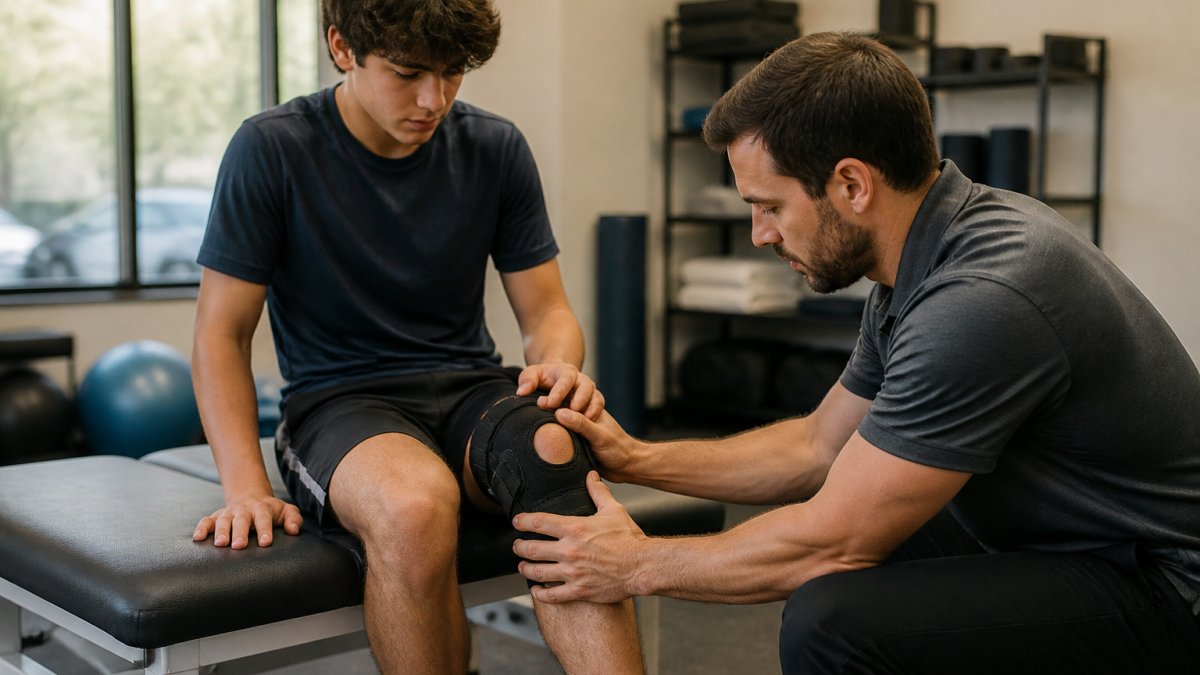
A teen sports injury needs an accurate diagnosis before any treatment starts. Sports injury physical therapy for teens begins with a proper evaluation, not a generic exercise sheet.
A common mistake is treating every sore knee the same. In teens, the growth plate changes how injuries present, so an assessment must account for skeletal maturity, not just the joint.
Common Sports Injuries in Teens and What They Mean for Recovery
Growth and training load drive most teen injuries. The growth plate is softer than mature bone, which raises the risk of growth-related injury during a teen's growth spurt.
Recovery time depends on the tissue involved. A mild sprain may settle in a couple of weeks. An ACL injury can take many months and often needs surgery first.
Step 2: Build a Personalized Treatment Plan Around Growth and Development
A personalized treatment plan for a teen athlete is not a scaled-down adult plan. It has to match the athlete's stage of growth and their sport.
Physical Therapy Exercises for Teen Athletes: Strengthening and Mobility Work
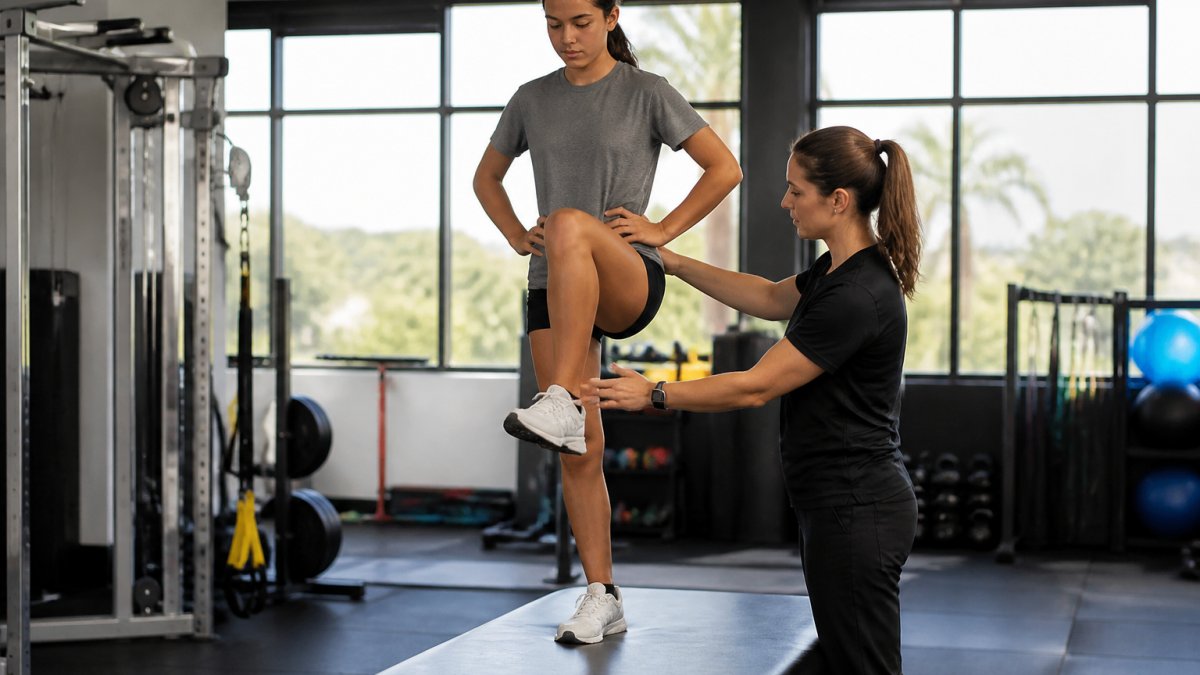
The right exercise program builds strength and mobility at the same time. Teens respond well to structured strengthening, but only when the load matches their stage of healing.
A typical program includes:
- Mobility work for the ankle, hip, and shoulder
- Strengthening for the muscles that support the injured joint
- Balance and single-leg control drills
- Proper form coaching on landing and cutting
What most guides miss is the order. Mobility comes before heavy loading. Control comes before speed. Skip a step and reinjury risk climbs. A physical therapist adjusts the program week by week based on how the teen moves.
How Long Does Sports Injury Physical Therapy Take?
Most teens need several weeks of sports injury physical therapy, and the exact timeline depends on the injury. A mild sprain may need a few weeks. A growth-related knee issue often settles over a season with load management. An ACL injury can take many months.
Three factors stretch or shorten the timeline:
- Injury severity: tissue damage sets the floor
- Consistency: teens who do their home program recover faster
- Sport demands: a return to cutting sports takes longer than a return to swimming
Return to Play After Sports Injury: Objective Testing and Reinjury Prevention
Return to play after sports injury should be a decision based on testing, not a feeling. A teen who "feels fine" can still fail a movement test. The gap in most guides is that they stop at "when pain is gone" instead of defining measurable criteria.
When to Seek Urgent Medical Care for a Teen Sports Injury
Some injuries need urgent medical care, not a routine PT visit. The practical challenge for families is telling a routine rehab problem apart from one that needs same-day or emergency evaluation. A useful way to sort it is by urgency level.
Seek emergency care immediately (call 911 or go to the nearest emergency department) for:
- A joint that looks deformed or will not bear weight after a fall or collision
- A loud pop with immediate collapse, especially in the knee, or a knee that gives way and swells rapidly
- Severe swelling within hours of the injury, or a limb that is cold, pale, or numb
- Head injury with confusion, vomiting, drowsiness, unequal pupils, or loss of consciousness
- Neck or back pain after a collision, or any new weakness or numbness in the arms or legs
- An open wound over a joint or bone, or a bone visibly pushing against the skin
Seek same-day or next-day medical evaluation for:
- Inability to put weight on the injured leg or use the injured arm for normal tasks
- Swelling that keeps increasing despite rest and elevation
- Pain that is worsening rather than settling over 24 to 48 hours
- A suspected fracture, such as point tenderness over a bone or pain with axial loading
- A suspected concussion without emergency signs, such as headache, dizziness, or difficulty concentrating after a blow to the head
Routine physical therapy evaluation is usually appropriate for:
- Gradual onset of pain with activity that improves with rest
- Mild sprains or strains with stable joints and preserved ability to bear weight
- Growth-related pain such as Osgood-Schlatter that is activity-related and settles with load management
- Persistent pain that is not improving with rest and basic home care
A common pattern in teens is that growth plate injuries can look like a routine sprain. The growth plate is softer than mature bone, so a fall or twist that would only sprain an adult's ligament can injure the growth plate in a teen. That is one reason a teen with point tenderness over a growth plate, or pain that persists after a "sprain," should be evaluated rather than managed with rest alone.
While waiting for care, protect the limb from further injury, avoid forcing weight or movement, and use ice and elevation for swelling. Do not try to "test" a deformed joint or push through severe pain. For suspected concussion, keep the teen out of sport and school physical activity until cleared by a medical professional.
Use this urgency guide to decide where a teen's injury should be seen.
| Urgency level | Signs and symptoms |
|---|---|
| Emergency care (call 911 or go to ED) | Deformed joint, loud pop with collapse, severe swelling, head injury signs |
| Same-day or next-day evaluation | Cannot bear weight, swelling increasing, worsening pain over 24 to 48 hours |
| Routine physical therapy evaluation | Gradual pain with activity, mild sprains with stable joints, growth-related pain |
Book a Sports Injury Physical Therapy Evaluation for Your Teen
The fastest path back to sport starts with a proper evaluation. At ProFormance Sports, our licensed physical therapists provide personalized treatment plans. We offer flexible scheduling.
Get started with ProFormance Sports. Create Account Create Reset
Frequently Asked Questions
What should a teen expect at a sports injury physical therapy appointment?
The first visit usually starts with a conversation about the injury, training load, and goals, followed by a physical exam that checks strength, range of motion, and movement mechanics. The physical therapist may use video or scan-based tools to spot imbalances. Teens often leave the first session with a few starter exercises and a clear picture of what the next few weeks look like. Parents are encouraged to attend and ask questions about the plan.
How long does sports injury physical therapy take for a teen?
Timelines vary by injury type and severity. Minor sprains or overuse irritation may resolve in a few weeks of guided care, while ACL reconstruction or fracture rehabilitation can take several months. Growth-related conditions such as Osgood-Schlatter disease often improve with activity modification and loading changes over weeks to months. A physical therapist sets milestones at the assessment and adjusts them as the teen progresses.
Can physical therapy help prevent sports injuries in teens?
Yes. A prevention-focused program targets the factors that raise injury risk: weak hip and core control, poor landing mechanics, and sudden jumps in training volume. Physical therapists screen movement patterns, teach proper form, and build progressive strengthening plans. Teens who complete a structured injury prevention program can carry those habits into every season, which supports safer training and better sports performance over time.
When can a teen return to sports after an injury?
Return to play after sports injury should be based on objective criteria, not just the absence of pain. Physical therapists use functional testing such as hop tests, strength comparisons between legs, and sport-specific drills to confirm readiness. A gradual ramp-up in practice intensity follows, with monitoring for swelling or soreness. Clearing a teen too early raises reinjury risk, so testing and a stepwise progression matter.