 ultimate-guide
Schroth Method Scoliosis Therapy: Tampa Guide 2026
Table of Contents
- What the Schroth Method Is (and Isn't)
- How the Schroth Method Addresses Scoliosis and Kyphosis
- Your Scoliosis Physical Therapy Evaluation: What to Expect
- Schroth Method Exercises for Scoliosis: Elongation, Derotation, and Breathing
- Schroth Method Treatment Duration and What Progress Looks Like
- Schroth Method for Teen scoliosis: What Parents Should Know
- How Therapy Fits With Bracing, Medical Care, and Home Practice
- Conclusion
- Frequently Asked Questions
Last Updated: October 21, 2026
What the Schroth Method Is (and Isn't)
The Schroth method is a conservative, non-surgical form of physical therapy for scoliosis and kyphosis that uses three-dimensional postural correction, trunk elongation, spinal derotation, and breathing techniques to address spinal curvature. It is not a cure, and it is not a set of generic stretches you can replicate from a video. (Source: the National Institute of Arthritis and Musculoskeletal and Skin Diseases (NIAMS))
That distinction matters. The difference comes down to individualized treatment: a Schroth-certified physical therapist assesses your specific curve pattern, then builds a personalized therapy program around it.
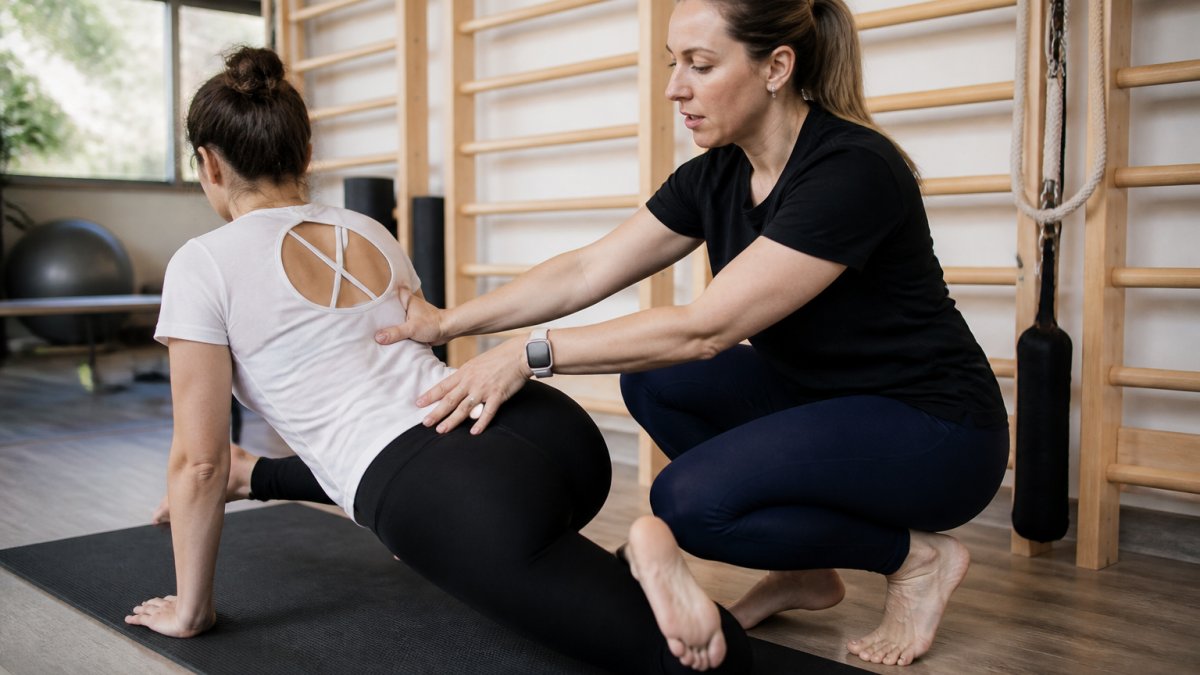
Here's what most guides get wrong: Schroth is a supervised, assessment-driven process. The therapist's hands, cues, and corrections are the treatment, not an accessory to it.
How the Schroth Method Addresses Scoliosis and Kyphosis
Scoliosis creates a three-dimensional spinal deformity: the spine rotates as it curves, and the rib cage follows. Schroth therapy works on all three planes at once rather than chasing the curve in one direction.
Your therapist teaches postural awareness so you can feel and correct your own alignment, then reinforces it with targeted exercises that address muscle imbalance on the concave and convex sides of the curve. The goals are functional improvement, pain reduction where pain is present, and better breathing mechanics through rib cage expansion.
For kyphosis, the same principles apply with different emphasis: trunk elongation and postural correction to reduce excessive forward rounding. Many patients find that consistent practice improves how they move day to day, though curve progression is not guaranteed to stop in every case.
Your Scoliosis Physical Therapy Evaluation: What to Expect
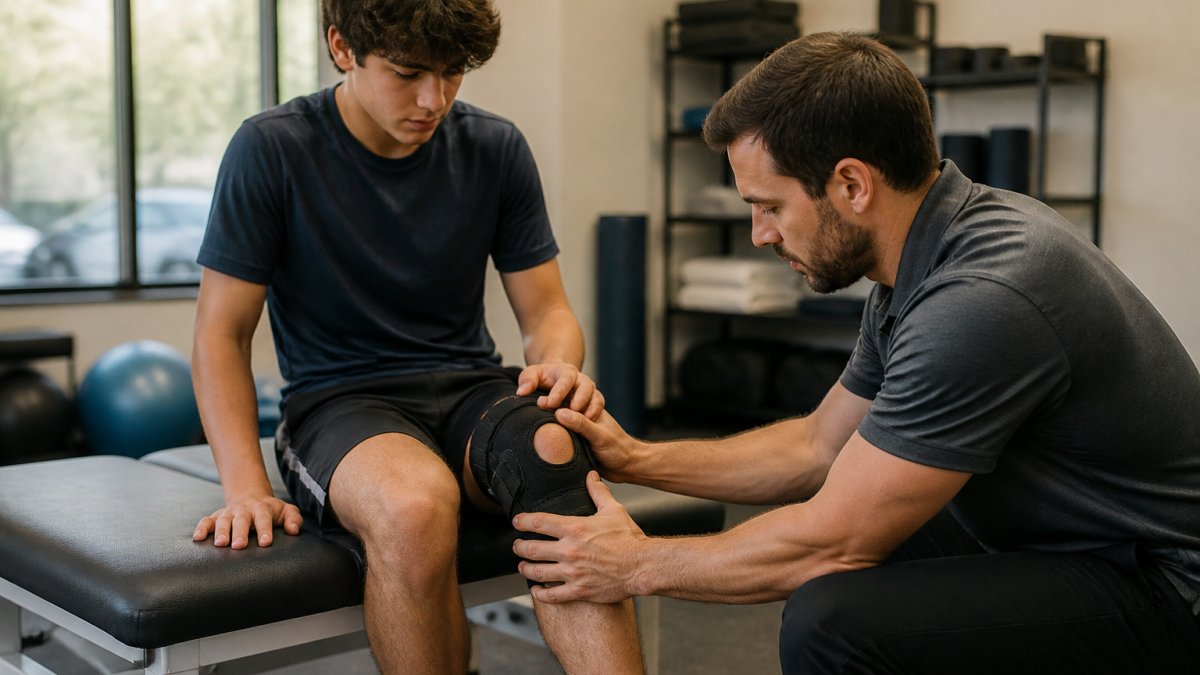
A scoliosis physical therapy evaluation is a structured assessment that maps your curve pattern, posture, breathing, and movement habits before any exercise is prescribed. Expect it to take most of a session, and expect to leave with a written plan rather than a vague promise.
The evaluation usually moves through four phases, in this order:
1. History and records review. Your therapist reviews your imaging reports, any prior scoliosis screening results, bracing history, growth status, and current symptoms. Bring your most recent imaging and any bracing records. Curve measurement without a baseline is guesswork, and your therapist can only build an accurate plan with the full picture in front of them.
2. Postural and curve assessment. You will be observed standing and seated from the front, side, and back. The therapist looks for shoulder and hip height differences, rib prominence (often checked with a forward bend test), trunk shift, and how your head sits over your pelvis. These observations are documented so progress can be compared later, because posture photos and consistent landmark measurements are more reliable than memory.
3. Breathing and movement screening. The therapist assesses rib cage mobility, how you breathe into each side of your trunk, and how you stabilize your spine during common movements such as standing from a chair, reaching overhead, or walking.
4. Goal setting and plan. You and the therapist agree on what success looks like: reduced pain, better posture, improved breathing capacity, holding a curve steady through a growth spurt, or returning to a specific activity. The plan should specify home exercise frequency, how progress will be measured, and when you will re-check measurements.
A few questions worth asking at the first visit:
- How will you measure my curve and track change over time?
- How many visits do you expect, and what would change that estimate?
- How will you coordinate with my physician or orthotist?
- What should I do at home between visits, and how will you check my form?
If you have been through physical therapy before and felt like the therapist was going through the motions, ask upfront how the plan will be individualized and how progress will be measured. A good evaluation answers those questions before you commit to a program.
Schroth Method Exercises for Scoliosis: Elongation, Derotation, and Breathing
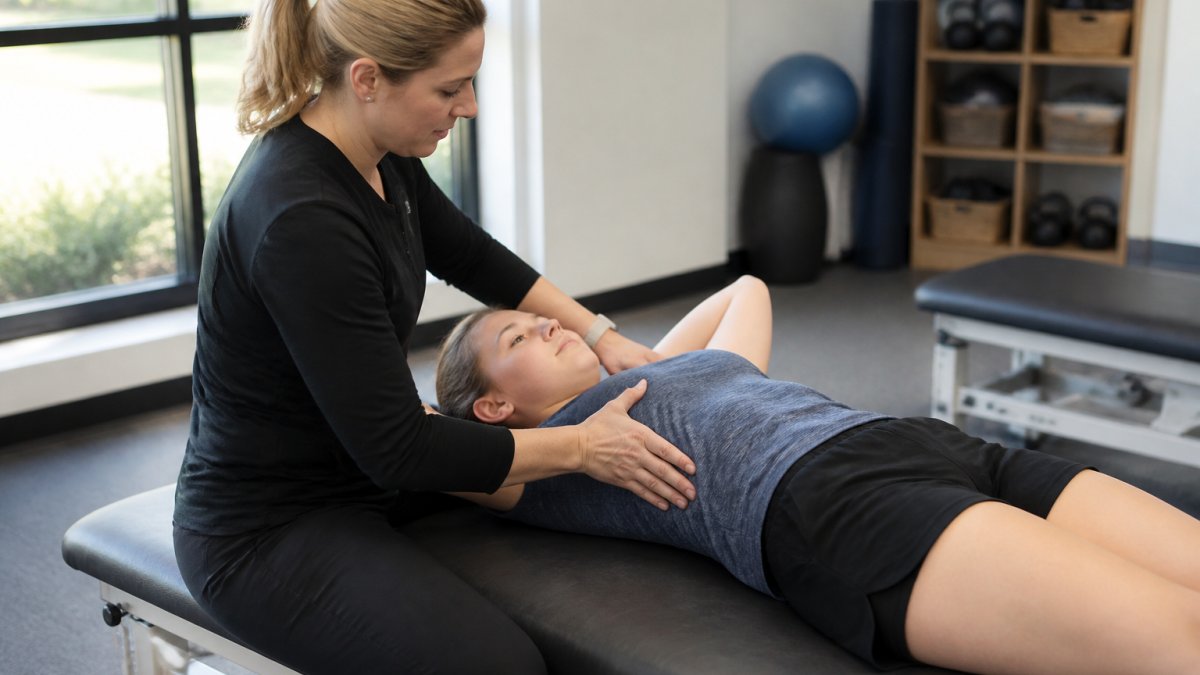
Schroth method exercises for scoliosis combine three elements in every repetition: trunk elongation to decompress the spine, spinal derotation to counter the rotational component of the curve, and rotational breathing to expand the collapsed side of the rib cage.
In practice, this looks different from standard gym work. You might lie on a wedge or roll, breathe into a specific part of your rib cage while your therapist resists, then hold a corrected position against gravity. The positions are curve-specific, which is why a generic exercise program rarely produces the same result.
Home exercises are a core part of the program, but they only work when a therapist has supervised the setup first. Practicing the wrong correction at home reinforces the wrong movement pattern.
Schroth Method Treatment Duration and What Progress Looks Like
There is no fixed timeline. Schroth method treatment duration depends on curve severity, age, growth status, how consistently you practice, and whether bracing or other medical care is part of the plan. Anyone who quotes you an exact number of visits before assessing your curve is guessing.
The common structure. Most programs follow a two-phase pattern. The first phase is an initial block of intensive sessions, often scheduled close together, to teach the curve-specific corrections and build reliable home practice. The second phase is a maintenance schedule with periodic therapist supervision, where the focus shifts to reinforcing form, adjusting for growth or bracing changes, and re-measuring progress. The length of each phase varies widely by patient.
What drives visit frequency and program length.
- Curve severity and pattern: larger or more complex curves usually need more supervised teaching time.
- Age and growth status: adolescents in a rapid growth spurt are often seen more frequently because the curve can change quickly.
- Bracing: a new brace or a brace adjustment usually means a therapy re-check so the exercise program matches the new support.
- Home practice consistency: patients who practice correctly between visits tend to need fewer supervised sessions to hold their corrections.
- Insurance and out-of-pocket factors: coverage for physical therapy varies by plan, and visit limits or prior-authorization requirements can shape the schedule. Ask your insurer about physical therapy benefits, visit caps, and whether a referral is required before you book a long block.
How progress is measured. Progress is tracked through repeatable measures rather than how you feel on any given day: curve measurement and posture photos, breathing capacity, functional tasks, and pain or activity scores where pain is present. Ask your therapist which measures they will repeat and when.
Realistic outcomes and evidence quality. Research supports Schroth-based physical therapy as a conservative option for improving posture, breathing, and function in some patients, and some studies suggest it can help manage curve progression. What the evidence cannot establish is a guaranteed curve reduction for every patient, and results vary by curve type, age, and consistency of practice. Distinguish functional goals (better posture, less pain, improved breathing, returning to activity) from curve goals (holding a curve steady or measurable postural change).
Schroth Method for Teen scoliosis: What Parents Should Know
Schroth method for teen scoliosis is most useful during periods of rapid growth, when curve progression risk is highest and postural habits are still forming. Teens often respond well because they can learn the corrections quickly and practice independently.
Parents should know three things. First, this is not a replacement for medical monitoring; your physician still owns the curve measurement and bracing decisions. Second, consistency matters more than intensity, and a short daily practice beats an occasional long session. Third, teens do better when they understand why the exercises are curve-specific rather than being told to just do them.
If your child has been recently diagnosed, ask whether a Schroth-certified physical therapist is part of the care team before committing to a long program.
How Therapy Fits With Bracing, Medical Care, and Home Practice
Schroth therapy works best as one part of a conservative treatment plan, alongside medical monitoring and, when indicated, bracing. It does not compete with your physician's recommendations; it complements them.
The practical structure looks like this:
| Component | Who Leads | Typical Frequency |
|---|---|---|
| Curve monitoring and imaging | Physician | Per physician schedule |
| Bracing decisions and fitting | Physician or orthotist | As clinically indicated |
| Schroth therapy and postural correction | Schroth-certified physical therapist | Initial block, then maintenance |
| Home exercises | Patient, supervised by therapist | Short daily sessions |
Coordination matters. Your therapist should be communicating with your physician about curve measurement and treatment goals, and you should bring bracing changes to your therapy sessions so the exercise program adapts.
Conclusion
The hardest part of scoliosis care is not learning the exercises. It is finding a provider who assesses your specific curve, coordinates with your medical team, and adjusts the plan as you grow or change. Generic programs rarely deliver that.
At ProFormance Sports, our licensed physical therapists are trained in the Schroth Method for idiopathic scoliosis and build individualized treatment plans around each patient's curve pattern, goals, and stage of growth. Our concierge model means flexible scheduling and a therapist who knows your case, supported by a multidisciplinary team.
Get started with ProFormance Sports and a Schroth-based plan built for your spine, not a template.
Frequently Asked Questions
What is the Schroth method for scoliosis?
The Schroth method is a conservative, non-surgical form of physical therapy for scoliosis and kyphosis. A Schroth-certified physical therapist teaches you individualized exercises that combine three-dimensional postural correction, trunk elongation, spinal derotation, and breathing techniques aimed at the rib cage. The goal is better spinal alignment, postural awareness, and functional improvement. It is a treatment approach delivered under therapist supervision, not a cure, and outcomes vary by curve type and how consistently the exercise program is followed.
Can the Schroth method help teenagers with scoliosis?
Teens are among the most common candidates for Schroth method for teen scoliosis because adolescence is when curve progression risk is highest. A physical assessment establishes the curve pattern, and the therapist builds a personalized therapy plan around growth, school schedule, and sports. For some teens, Schroth therapy is used alongside bracing and medical monitoring rather than instead of them. Parents should ask about curve measurement at baseline and how progress will be tracked over the treatment period.
What happens during a Schroth method physical therapy session?
Sessions typically start with a postural assessment and review of home exercises. The therapist then guides you through targeted exercises for elongation, derotation, and rib-cage expansion, correcting your movement patterns in real time. You practice breathing techniques in corrected positions and learn to carry postural awareness into daily life. Most sessions run 45 to 60 minutes, and you leave with home exercises to practice between visits. The first visit is usually a longer evaluation.
How long does Schroth method treatment take?
Schroth method treatment duration depends on curve severity, age, goals, and how consistently you practice at home. Many patients attend sessions weekly for several months, then taper to periodic check-ins once the exercise program is established. Teens in a growth spurt may need closer supervision. Because progress is measured through curve measurement, posture, pain, and function, your therapist should set review points rather than promise a fixed timeline. Ask for a written plan with milestones.
Is Schroth therapy used alongside bracing or other scoliosis care?
Yes. Schroth therapy is often part of a broader conservative treatment plan that can include bracing, medical monitoring, and, in some cases, orthopedic consultation. The exercises support postural correction and spinal stabilization, while a brace is fitted and managed by the prescribing physician or orthotist. Coordination matters: your physical therapist should communicate with your medical team so treatment goals align. Never change or stop bracing on your own based on therapy progress.
How do physical therapists evaluate scoliosis before starting Schroth exercises?
A scoliosis physical therapy evaluation usually includes a health history, physical assessment of posture and movement patterns, observation of the spine and rib cage in standing and bending positions, and a review of any imaging or curve measurement from your physician. The therapist identifies muscle imbalance and postural imbalance, then maps an individualized treatment plan. Bring recent X-ray reports if you have them. The evaluation determines which exercises and breathing cues are appropriate for your curve.