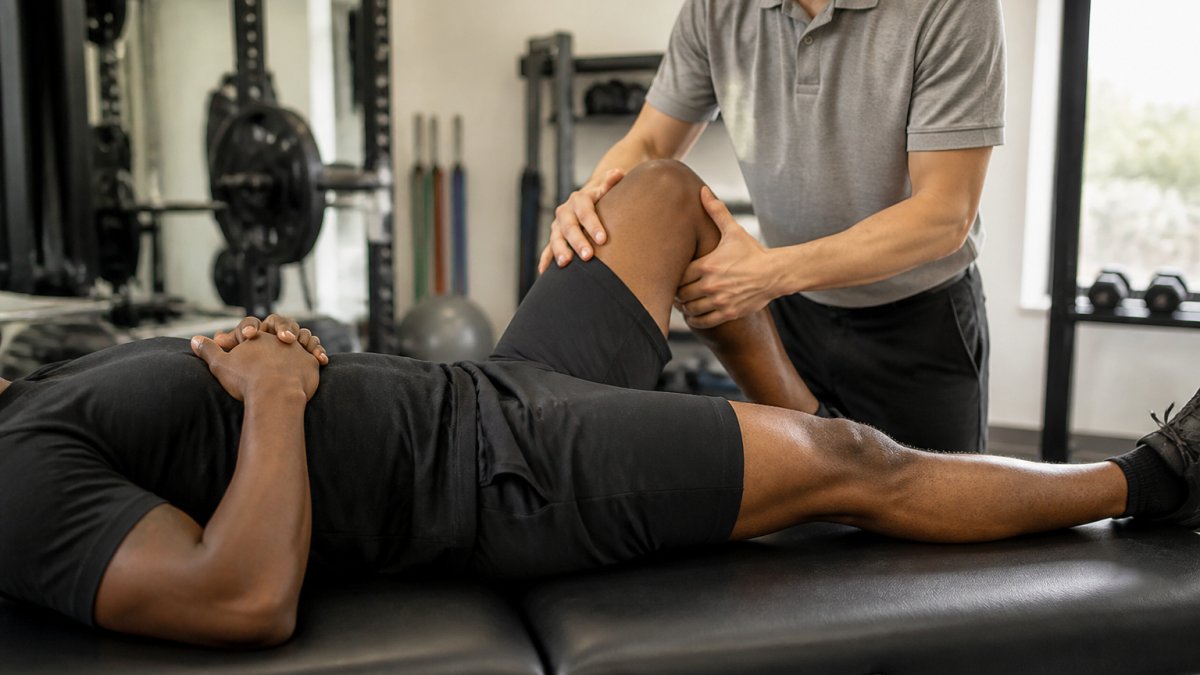
 blog
Sports Physical Therapy Near Me: How to Choose Care
Last Updated: October 24, 2026
Quick Summary
Sports physical therapy is a specialized form of rehabilitation that evaluates how an athlete moves, treats the specific injury, and rebuilds strength and mobility so the athlete can return to their sport safely. Choose a clinic that performs a movement assessment at the first visit, provides a written plan with measurable goals, and offers return-to-play testing before discharge.
- Your first visit should be an evaluation with a movement assessment and written plan, typically 45 to 60 minutes.
- Ask how the clinic decides when an athlete is ready to return to play, and expect a testing protocol answer.
- Get your therapy benefits in writing: visit limits, copay or coinsurance, deductible remaining, referral rules, and network status.
- Many plans cap therapy visits per year, commonly in the range of 20 to 60, so confirm your limit.
- Skipping the reconditioning phase after injury is a common reason athletes re-injure the same tissue.
Table of Contents
- Sports Physical Therapy Near Me: What to Look For
- What to Expect at Your First Appointment
- Building a Sports Injury Prevention Program That Works
- Athlete Injury Recovery: Timelines and Measurable Progress
- Sports Performance Training Beyond the Gym
- Sports Physical Therapy Insurance Coverage and Payment Options
- Remote and After-Hours Access: Flexible Scheduling
- Frequently Asked Questions
Sports Physical Therapy Near Me: What to Look For
Searching for sports physical therapy near me usually happens at a stressful moment: a tweaked knee before tryouts, a shoulder that never fully healed, or a parent worried about a young athlete's scoliosis curve.
Sports physical therapy is a specialized form of rehabilitation that evaluates how an athlete moves, treats the specific injury, and rebuilds strength and mobility so the athlete can return to their sport safely. General physical therapy treats the injury. Sports physical therapy treats the injury and the movement pattern that caused it.
That distinction drives everything below. We'll cover what a first appointment should include, how to build an injury prevention program, realistic recovery timelines, insurance questions, and scheduling flexibility. But first, here's what most guides get wrong: they tell you to pick the clinic closest to home. Convenience matters, yet a clinic that understands your sport matters more.
A Practical Clinic-Selection Checklist
Use this checklist before you schedule an appointment anywhere. A clinic that handles sports medicine well will answer every item without hesitation.
- Licensed physical therapists on staff with sports or orthopedic experience
- A movement assessment performed at the first visit, not just a questionnaire
- A written treatment plan with measurable goals and target dates
- Manual therapy and therapeutic exercise offered together, not one instead of the other
- Sport-specific training or return-to-play testing before discharge
- Clear answers about insurance, billing, and what you'll owe
- Scheduling that fits school, work, and practice schedules
- Communication with your physician, coach, or orthopedic surgeon when needed
What to Expect at Your First Appointment
Your first visit should be an evaluation, not a treatment session. Expect a clinical evaluation that covers your injury history, a movement assessment of the whole body, and a conversation about your goals for return to sport.
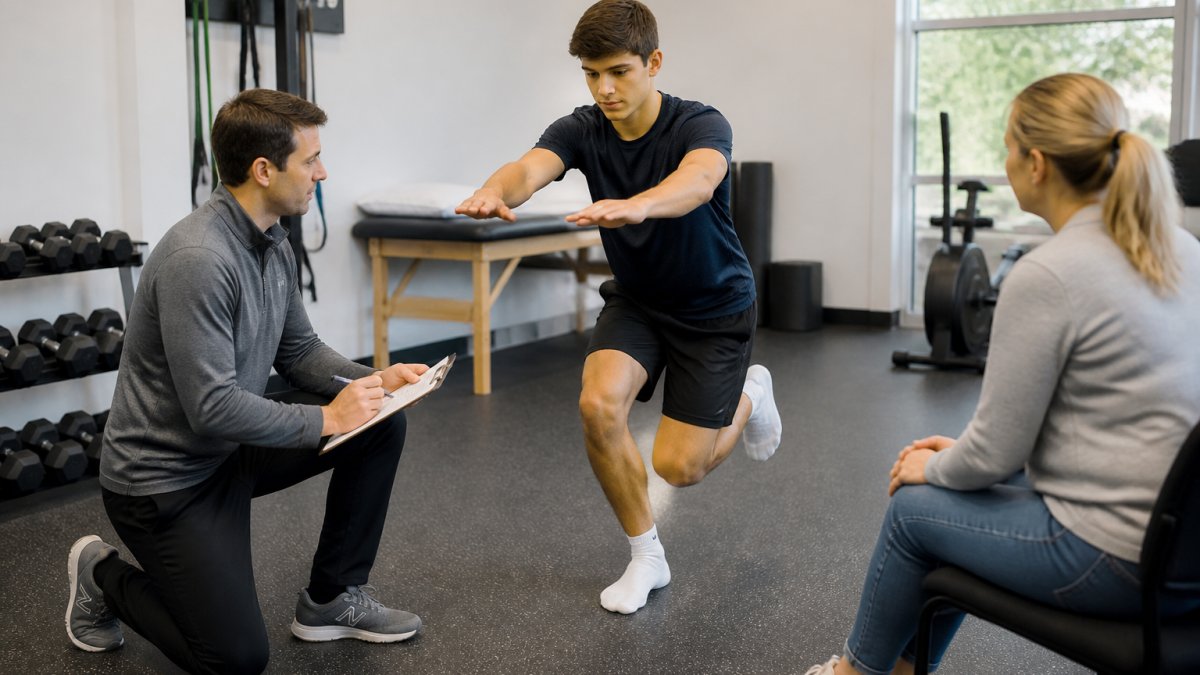
A thorough first appointment typically follows this sequence:
- History and goals (10-15 minutes). When the pain started, what makes it worse, what you need to get back to doing, and what your season or event calendar looks like. Bring your competition dates, they shape the plan.
- Movement assessment (15-20 minutes). Squatting, hinging, single-leg balance, and overhead reach reveal compensations that a focused exam on the painful joint would miss. Expect the therapist to watch you move in several planes, not just the injured area.
- Strength and mobility testing (10-15 minutes). Side-to-side comparisons show how far off the injured side is. Common measures include single-leg squat depth and knee tracking, ankle dorsiflexion range, hip abduction and external rotation strength, and overhead shoulder range. Handheld dynamometry or a simple manual muscle test can put a number on the gap.
- A written plan (5-10 minutes). Frequency, expected duration, the milestones that mark progress, and what you'll do between visits. Ask for it in writing or through the patient portal so you can track it.
- First treatment, if appropriate. Many clinics begin gentle treatment the same day, manual therapy or a starter exercise program, while others reserve the first visit for evaluation only. Either is reasonable; ask which model the clinic uses.
What to bring: your insurance card and photo ID, any imaging reports or physician notes, a list of medications, the shoes you train in, and shorts or athletic clothing you can move in.
Red flags to watch for in the evaluation:
- No movement assessment, only a questionnaire or a scan review
- No written plan or measurable goals by the end of the visit
- No discussion of return-to-sport criteria, only pain relief
- No communication plan with your physician, coach, or orthopedic surgeon
If an evaluation skips the movement assessment, that's a red flag. The injury is where the problem shows up. The cause is often somewhere else.
Building a Sports Injury Prevention Program That Works
An effective sports injury prevention program combines strength, mobility, and sport-specific loading, and it runs year-round rather than for a few weeks before the season. The best programs are boring: consistent, progressive, and built around the demands of one sport.
What separates a program that works from a generic handout:
- Strength before power. Athletes who can't control their own body weight shouldn't add speed and load yet.
- Mobility where the sport demands it. Runners need ankle and hip range. Overhead athletes need thoracic and shoulder mobility. Cyclists need hip flexor and hamstring length.
- Sport-specific training. Cutting, decelerating, and landing mechanics for team sports. Cadence and position work for cyclists. Arm care routines for throwers.
- Load management. Sudden spikes in training volume are a common trigger for overuse injuries. Progress gradually.
A common mistake is treating prevention as a checklist you complete once. Injury risk doesn't work that way. It changes as training loads change, as growth spurts hit young athletes, and as seasons shift.
Athlete Injury Recovery: Timelines and Measurable Progress
Recovery timelines depend on the injury, the tissue involved, and how consistently the athlete follows the plan. A mild strain and a surgically repaired ligament follow very different paths. What should stay consistent is how progress gets measured.
Ask your physical therapist how they'll track recovery. Good answers include objective markers:
| Recovery Phase | What's Measured | What Progress Looks Like |
|---|---|---|
| Early (protection) | Pain at rest, swelling, range of motion | Pain decreasing, motion returning |
| Middle (rebuilding) | Strength symmetry, movement quality | Injured side closing the gap |
| Late (reconditioning) | Sport-specific drills, landing mechanics | Confident, controlled sport movements |
| Return to play | Testing battery vs. the uninjured side | Passing criteria, not just feeling better |
Measurable progress beats vague reassurance. If nobody can tell you what "better" looks like in numbers or tests, ask why.
Sports Performance Training Beyond the Gym
Sports performance training is structured coaching that improves how an athlete moves, loads, and recovers, and it differs from general strength training because every exercise maps to a sport demand. Many athletes already lift with a strength coach. That's valuable.
At ProFormance Sports, our performance training runs alongside clinical care. The same team that rehabilitates an injury also builds the strength, mobility, and conditioning that reduce the chance of the next one. Readers interested in training aids and equipment beyond the clinic can browse the product catalog.
The practical difference shows up in the details. A strength coach programs squats and cleans. A physical therapist notices the ankle stiffness limiting the squat depth and the hip weakness changing how the knee tracks. Put both together and the training gets more effective, not just harder.
Sports Physical Therapy Insurance Coverage and Payment Options
Coverage for sports physical therapy depends on your specific plan, whether you have a referral, and whether the clinic is in network. Most plans cover medically necessary therapy, but the details vary widely by insurer and plan type.
The four numbers that decide your out-of-pocket cost:
- Copay or coinsurance. A copay is a flat dollar amount per visit; coinsurance is a percentage of the allowed amount, often 20% after the deductible. Ask which applies to therapy visits specifically.
- Deductible. If you haven't met it, you may pay the full allowed amount until you do. Ask how much remains and whether therapy counts toward it.
- Visit limit. Many plans cap therapy visits per year, commonly in the range of 20 to 60, though it varies widely, and some reset on the calendar year while others run on a plan year. Ask which, and whether extensions are possible with documentation.
- Allowed amount. The negotiated rate the insurer pays, which is usually lower than the clinic's list price. Ask the clinic for its self-pay rate as a comparison point.
Referral rules by plan type. HMO and POS plans commonly require a referral from a primary care physician before therapy; PPO and EPO plans often do not, but some still require one for out-of-network care.
In-network vs. out-of-network. In-network clinics have a contracted rate and usually lower patient responsibility. Out-of-network care may be covered at a lower percentage or not at all, and balance billing rules vary.
Concierge and performance services. Concierge physical therapy, sports performance training, and movement screens often sit outside insurance coverage because they aren't treating a diagnosed condition. You can also browse the shop for products and payment-related offerings.
Remote and After-Hours Access: Flexible Scheduling
Scheduling flexibility decides whether rehab actually happens. A plan that requires missing practice, class, or work three times a week falls apart by week two.
Flexible scheduling can include early and late appointment slots, condensed visit frequencies, and home program guidance between visits.
For families juggling multiple athletes and school pickup, this isn't a minor convenience. It's the difference between a plan that gets followed and one that gets abandoned.
Finding the right sports physical therapy near me option comes down to three questions: does the clinic assess how you move, does it measure progress with real tests, and does it fit your life? If any answer is no, keep looking.
Frequently Asked Questions
Is sports physical therapy covered by insurance?
Many health insurance plans cover sports physical therapy when it is medically necessary, but coverage varies by plan. Check your deductible, copay, and visit limits before booking. Some clinics, including ProFormance Sports, offer concierge and self-pay options for services that insurance may not cover. Always ask for a benefits verification before your first appointment so you understand your out-of-pocket costs.
What should I look for when choosing a sports physical therapist?
Look for a licensed physical therapist with experience treating your specific sport or injury. Ask whether they use movement assessments, manual therapy, and sport-specific training. Confirm scheduling flexibility, location convenience, and whether they accept your insurance. A good clinic will explain its treatment plan and progress measures upfront. ProFormance Sports, for example, offers concierge care with individualized plans and advanced technology like InBody and Fit 3D scans.
How long does sports physical therapy take?
Recovery timelines depend on the injury, its severity, and your goals. Minor strains may resolve in a few weeks, while post-surgical rehabilitation can take several months. A physical therapist will set measurable milestones and adjust your plan as you progress. Ask for a projected timeline at your first visit and request regular progress checks so you know whether you are on track to return to sport.
Can sports physical therapy help prevent injuries?
Yes. A sports injury prevention program typically includes movement assessments, strength and mobility work, and sport-specific drills that address imbalances before they cause problems. Physical therapists can identify risk factors such as poor landing mechanics or limited flexibility. Combined with proper conditioning and recovery, these programs help reduce injury risk. ProFormance Sports designs prevention programs for young athletes and active adults based on individual movement patterns.