 blog
Sports Physical Therapy Tampa: Choosing the Right Clinic
Table of Contents
- What Sports Physical Therapy in Tampa Actually Involves
- How to Compare Sports Physical Therapy Clinics in Tampa
- Building a Sports Injury Prevention Program That Fits Your Sport
- Youth Sports Injury Prevention: What Parents Should Know
- Return to Sport Physical Therapy and Clearance Criteria
- Sports Performance Training Beyond Rehabilitation
- Insurance, Payment, and What to Ask Before Booking
- Frequently Asked Questions
Last Updated: October 20, 2026
What Sports Physical Therapy in Tampa Actually Involves
Sports physical therapy is a specialized branch of rehabilitation focused on helping athletes recover from injury, restore movement, and return to competition safely.
At ProFormance Sports, we build every treatment plan around the specific demands of your sport, not a generic exercise sheet. That distinction matters more than most people realize.
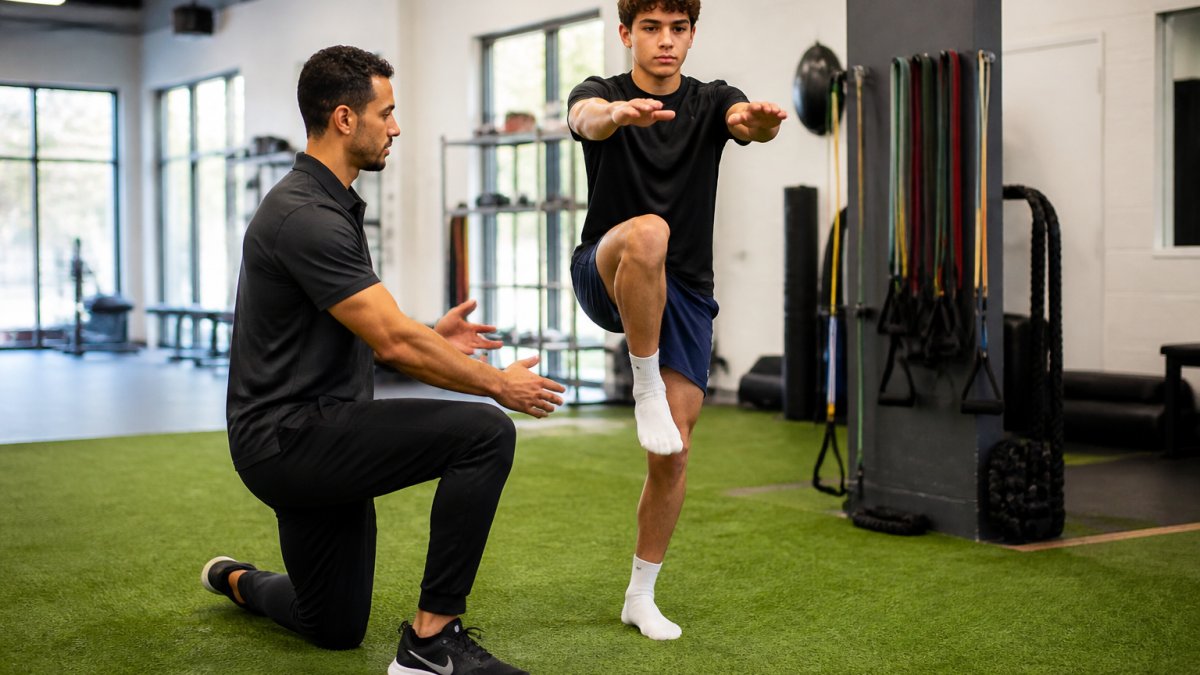
How It Differs From General Physical Therapy
General physical therapy focuses on restoring basic function: walking without pain, lifting your arm overhead, getting through a workday comfortably. Sports physical therapy adds a performance layer on top of that foundation.
The difference shows up in three places:
- Assessment: A movement assessment identifies sport-specific weaknesses, not just general mobility limits
- Programming: Therapeutic exercise is built around the demands of your sport, from cutting and sprinting to overhead throwing
- End point: General PT ends when daily function returns; sports rehabilitation continues until you meet return-to-sport criteria
A common mistake is treating a sports injury at a general clinic and wondering why the same exercises don't produce results. The exercises aren't wrong. They're just not built for what your body needs to do on the field.
How to Compare Sports Physical Therapy Clinics in Tampa
Most clinic pages tell you they treat athletes. Very few tell you how to tell them apart. This section gives you a neutral framework for comparing sports physical therapy clinics in the area, plus the practical details that actually affect your experience: credentials, appointment access, referral requirements, and whether care is in person or virtual.
Start With the Provider, Not the Building
Who will actually treat you matters more than the waiting room. Ask whether the treating clinician is a licensed physical therapist and whether they hold sports-specific credentials.
Also ask about athlete experience by sport. A therapist who regularly treats overhead throwers will assess a pitcher's shoulder differently than a generalist. If your sport is niche, gymnastics, rowing, martial arts, ask directly how many athletes with that demand profile they see in a typical month.
Practical Comparison Details to Collect
Use this checklist to compare clinics side by side. The answers are usually available by phone or on the clinic's website, and collecting them in one place prevents apples-to-oranges comparisons.
- Credentials: Licensed PT? SCS, CSCS, or other sports certification? Years treating athletes?
- Referral requirements: Does the clinic require a physician referral before the first visit, or can you book directly? Requirements vary by clinic and by payer, so confirm before scheduling.
- Appointment access: Same-day or next-day openings for acute injuries? Evening and early-morning slots? Saturday hours?
- Continuity: Will you see the same therapist each visit, or rotate among staff?
Questions That Reveal Depth Quickly
A few questions separate clinics that specialize in athletes from clinics that simply accept them:
- "How do you measure whether I'm improving?" A clinic that tracks functional improvement with objective data will answer immediately. A clinic that hesitates is relying on how you feel, which is a poor substitute for measurable progress.
- "What does your return-to-sport testing look like?" Look for a described sequence, strength symmetry, functional movement screen, sport-specific drills, rather than a calendar date.
- "Who will I see at each appointment?" Continuity affects both rapport and the quality of progress tracking.
- "What happens if I plateau?" A clinic with a plan for stalled progress, reassessment, program modification, referral, is more useful than one that simply adds visits.
Appointment access matters more than people expect. An injury that sits untreated for two weeks while you wait for an opening rarely heals faster. When you call, ask about the next available evaluation slot and whether the clinic holds openings for acute injuries.
A Note on Referrals and Direct Access
Referral requirements depend on your state's practice rules and your insurance plan. Some plans allow you to see a physical therapist without a physician referral; others require one before the first visit or before reimbursement. Before booking, confirm two things: whether the clinic requires a referral to schedule, and whether your insurer requires one to pay. Getting both answers in writing prevents surprise bills.
Building a Sports Injury Prevention Program That Fits Your Sport
An injury prevention program for youth athletes works best when it matches the sport's actual movement patterns.
A well-built program includes four components: a movement assessment to find asymmetries, strength work targeting the muscles your sport loads hardest, neuromuscular training for landing and cutting mechanics, and a home exercise routine you'll actually do consistently.
Most guides miss the consistency problem. A prevention program only works if it's simple enough to repeat three or four times a week during the season. Complexity is the enemy here.
For sport-specific programs, the priorities differ by activity:
| Sport Demand | Primary Focus | Secondary Focus |
|---|---|---|
| Running and sprinting | Hip and calf strength | Load management |
| Cutting and pivoting | Single-leg control | Landing mechanics |
| Overhead throwing | Shoulder and scapular control | Rotational core strength |
| Swimming | Shoulder mobility and stability | Thoracic rotation |
Youth Sports Injury Prevention: What Parents Should Know
Youth sports injury prevention starts with load management and movement quality, not with buying more equipment. Young athletes are still growing, and their training volume needs to match their stage of development. (Source: National Athletic Trainers' Association (NATA) position statement on return-to-play)
Parents should watch for three warning signs: pain that persists after activity, a visible change in movement or gait, and a drop in performance that doesn't resolve with rest.
Growth plates are a real consideration in adolescents.
We also encourage parents to ask coaches about off-season training volume. Year-round single-sport participation raises overuse risk, and a prevention program should account for that.
Return to Sport Physical Therapy and Clearance Criteria
Return to sport physical therapy uses objective criteria, not calendar dates, to decide when an athlete is ready to compete again. Time since injury is a poor predictor of readiness.
Clearance typically requires several boxes checked: full pain-free range of motion, strength within an acceptable range of the uninjured side, passing a functional movement assessment, and completing sport-specific drills at full speed without compensation.
The final stage is graded return to activity. That means progressive exposure to practice intensity before full competition, with monitoring for setbacks. Skipping this step is how re-injury happens.
Sports Performance Training Beyond Rehabilitation
Sports performance training picks up where rehabilitation ends. Once an athlete is cleared, performance work focuses on building capacity: power, speed, agility, and sport-specific conditioning.
This is where the training overlaps with injury prevention. A well-designed performance program reduces injury risk as a byproduct of building strength and better movement patterns.
One honest limitation: performance training won't fix a structural problem.
Insurance, Payment, and What to Ask Before Booking
Cost is the question most clinic pages avoid. This section gives you a framework for verifying coverage, comparing self-pay options, and understanding what you are actually paying for, before you book.
Verify Your Benefits in Four Steps
Insurance coverage for physical therapy varies by plan, so the only reliable answer comes from your specific policy. Work through these steps before your first appointment:
- Confirm physical therapy is a covered benefit. Ask your insurer whether outpatient physical therapy is covered under your plan and whether it falls under a deductible or copay.
- Ask about visit limits. Many plans cap the number of covered visits per calendar year or per condition. Ask what your limit is and how many visits you have used.
- Ask about authorization requirements. Some plans require prior authorization before the first visit or after a set number of visits. Confirm whether the clinic or you are responsible for obtaining it.
- Check network status. Confirm whether the clinic is in-network for your specific plan, not just whether it accepts your insurer. Out-of-network benefits, if you have them, usually mean higher cost sharing.
Get the answers in writing, either by email or through your insurer's member portal. Verbal confirmations are difficult to rely on if a claim is later denied.
What Self-Pay and Concierge Models Usually Involve
Concierge physical therapy models often sit outside standard insurance networks. That means you should ask about payment options and get a clear written estimate before committing. Common structures include:
- Per-visit pricing: A flat rate for each session, sometimes with a discount for a package of visits.
- Package or episode pricing: A bundled price for an evaluation plus a defined number of follow-ups.
- Membership models: A recurring fee that includes a set number of visits or ongoing access to programming.
Ask for the estimate in writing, including what is included in each visit (evaluation, manual therapy, exercise programming, take-home equipment) and what is not. We would rather you understand the cost upfront than be surprised by a bill.
Questions Worth Asking Any Clinic Before Booking
- Do you accept my insurance plan, and is prior authorization required?
- What is the cost per visit if I pay out of pocket?
- How many visits does a typical treatment plan involve, and how will I know when I am nearing the end?
- Who will I see at each appointment, and will it be the same therapist?
- What is your cancellation and scheduling policy, and is there a fee for late cancellations?
The American Physical Therapy Association's patient resources explain what to expect from a physical therapy evaluation and how to advocate for your care.
For families navigating school-related services, the Florida Department of Education's exceptional student education resources outline support options that may apply. ProFormance Sports is a Step Up For Students provider, which may help eligible families access services.
Frequently Asked Questions
What does a sports physical therapist do?
A sports physical therapist assesses how your body moves, then builds a treatment plan around the demands of your sport. That typically includes a movement assessment, hands-on treatment, therapeutic exercise, and sport-specific drills. The goal is to restore mobility and strength, then test whether you can handle sprinting, cutting, or throwing without compensations. Many clinics also run home exercise programs and re-test progress every few weeks so you can see functional improvement rather than guessing.
How do I choose a sports physical therapy clinic in Tampa?
Start with credentials: look for licensed physical therapists who treat athletes regularly and can describe their return-to-sport criteria. Ask how many patients a therapist sees per hour, whether they use movement assessment tools, and how quickly you can get an appointment. Confirm insurance and payment terms in writing before your first visit. A clinic that answers these questions clearly, and lets you meet your therapist first, is usually a better fit than one that only quotes a price.
Can I keep training while receiving sports physical therapy?
Often yes, with modifications. Your therapist can usually keep you in the gym or on the field while restricting movements that stress the injured tissue. The key is a written plan: which drills are cleared, which are paused, and what pain or swelling signals mean you should back off. Ask for that in your first or second visit so your strength coach and therapist are working from the same instructions instead of giving you conflicting advice.
How long does sports physical therapy take?
Timelines depend on the injury, your sport, and how consistently you do the home exercises. Minor strains may resolve in a few weeks, while post-surgical rehabilitation can run several months. Ask your therapist for milestones rather than a single end date: full range of motion, pain-free daily activity, then sport-specific testing. Reassess every few weeks. If progress stalls, the treatment plan should change rather than continue unchanged.