 ultimate-guide
The Schroth Method for Teen Scoliosis: A Complete Guide
Last Updated: October 31, 2026
Quick Summary
The schroth method is a scoliosis-specific exercise approach that uses three-dimensional posture correction and rotational breathing to shift the spine out of its curved pattern. It works best as one part of a broader treatment plan coordinated with a physician, and it is not a replacement for bracing or surgical evaluation when those are recommended.
- Schroth exercises teach the body to actively correct spinal curves and hold that correction during movement.
- Clinicians weigh growth remaining, curve size and pattern, rotation, and symptoms before recommending Schroth for a teen.
- Short daily home practice of ten to fifteen minutes often works better than one long weekly session.
- Research on Schroth for adolescent idiopathic scoliosis is still developing, so it should not be presented as a way to reverse a curve.
- Ask a prospective therapist about their Schroth training, adolescent caseload, and how they coordinate with orthopedic providers.
Table of Contents
- What the Schroth Method Is and How It Works
- Is Schroth Right for Your Teen? Eligibility and Treatment Planning
- Schroth Method Evaluation: What a Clinical Assessment Looks Like
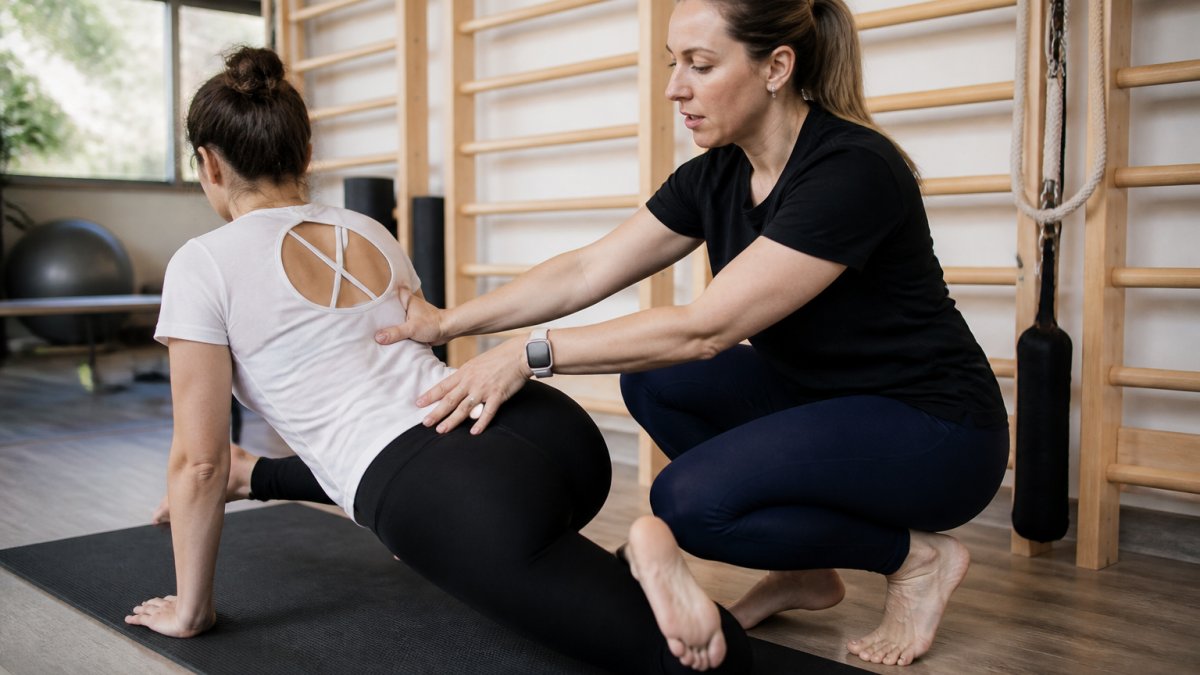
- What a Teen's Schroth Therapy Session Looks Like
- Schroth Exercises for Teens: Home Practice and Teen-Friendly Adaptations
- Schroth Therapy and Scoliosis Bracing: Coordinating Treatment Decisions
- Realistic Outcomes, Limits, and Your Next Step With a Qualified Therapist
- Frequently Asked Questions
What the Schroth Method Is and How It Works
The Schroth method is a scoliosis-specific exercise approach that uses three-dimensional posture correction and rotational breathing. For parents trying to decide whether it actually improves scoliosis, the honest starting point is that the research base is still developing, and the method works best as one part of a broader treatment plan. National Scoliosis Foundation overview of scoliosis treatment options
What sets the method apart is its emphasis on active correction. Rather than asking a patient to hold a fixed position, Schroth exercises teach the body to shift the spine out of its curved pattern and hold that correction during movement.
Three-Dimensional Posture Correction and Rotational Breathing
Scoliosis is a three-dimensional deformity, so the correction has to address more than side-to-side bending. Schroth exercises work on the sagittal and transverse planes as well, guiding the trunk into alignment through targeted positioning and breath.
Rotational breathing is central to this. A patient directs the breath into the concave side of the curve, which helps lengthen the compressed areas of the trunk and encourages the ribcage to move back toward a more symmetrical position.
Spinal Elongation, Alignment, and Curve De-Rotation
The method's goals center on elongation, alignment, and de-rotation of the curve. Elongation focuses on lengthening the spine, alignment on bringing the head and trunk into a more balanced posture, and de-rotation on reducing the twisting component of the deformity.
Whether these gains hold outside the clinic depends on how well a patient carries the posture into daily life. That is why the home practice component matters, and why a qualified therapist typically reviews progress regularly rather than setting exercises once and walking away.
Is Schroth Right for Your Teen? Eligibility and Treatment Planning
Schroth therapy is generally considered for adolescents with idiopathic scoliosis, and eligibility is typically decided with the treating physician. Find a Tampa Schroth guide covering local delivery to see how the program is run in your area. Scoliosis Research Society patient resources on adolescent treatment
What most general descriptions leave out is how much the plan changes from one teen to the next. A clinician typically weighs four factors before recommending Schroth:
- Growth remaining. Skeletal maturity matters more than chronological age. A teen who is still growing, with open growth plates and a Risser sign below 3, is at higher risk of curve progression and is usually monitored more closely. Schroth may be used alongside that monitoring, but it does not replace it. A teen who is nearly done growing has a different risk profile and a different exercise plan.
- Curve size and pattern. Curve size is one of several factors a clinician weighs when deciding whether exercise, bracing, or surgical discussion is appropriate, and Schroth is not a substitute for medical evaluation. Curve location matters too: a thoracic curve, a lumbar curve, and a double curve each call for different breathing and positioning cues.
- Curve rotation. Scoliosis is a three-dimensional deformity, and the amount of vertebral rotation affects which exercises a therapist prioritizes. A curve with significant rotation may need more de-rotation work and more careful breathing instruction.
A practical planning conversation should cover:
- How often sessions will happen and how long the initial phase lasts
- What home practice will look like on school nights and during sports season
- How progress will be measured (posture photos, scoliometer readings, function, or repeat imaging ordered by the physician)
When you talk with a provider, ask how they plan to measure progress, how often sessions will happen, and how the therapy will be coordinated with the orthopedic team. Learn how to choose a qualified sports physical therapy clinic for a teen's program.
The article lists four factors a clinician weighs before recommending Schroth for a teen.
| Factor | What it means | Why it matters |
|---|---|---|
| Growth remaining | Skeletal maturity, Risser sign below 3 | Higher risk of curve progression |
| Curve size and pattern | Thoracic, lumbar, or double curve | Each needs different breathing and positioning cues |
| Curve rotation | Amount of vertebral rotation | Affects which exercises are prioritized |
| Symptoms and goals | Pain, posture, sport, body image | Shapes the individual plan |
Schroth Method Evaluation: What a Clinical Assessment Looks Like
Families can prepare by bringing recent imaging reports, any brace or treatment notes, and a list of questions. Find a nearby clinic that offers this assessment if you are ready to schedule one. The evaluation is also a good time to ask about the therapist's training and how often they work with adolescent scoliosis patients.
What a Teen's Schroth Therapy Session Looks Like
Good sessions feel active rather than passive. Teens who can see their posture change in a mirror or on video often stay more engaged. The therapist will usually send the teen home with a short set of exercises to repeat between visits.
Schroth Exercises for Teens: Home Practice and Teen-Friendly Adaptations
Home practice is where most of the consistency comes from. A short daily routine, even ten to fifteen minutes, often works better than a long session once a week.
Watch for the common mistake of letting the exercise become a chore that gets dropped during busy periods. Build a routine the teen actually wants to keep, and review it together at each visit.
Schroth Therapy and Scoliosis Bracing: Coordinating Treatment Decisions
Schroth therapy is not a replacement for medical decisions about observation, bracing, or surgery. See how teen sports injury care is coordinated alongside other treatment when a brace is part of the plan.

Families should ask their physician how Schroth fits with any brace plan and what the monitoring schedule looks like. A coordinated plan helps avoid conflicting instructions and gives the teen a clearer picture of the overall treatment path. Scoliosis Research Society on nonsurgical scoliosis management
Realistic Outcomes, Limits, and Your Next Step With a Qualified Therapist
Schroth therapy may be associated with changes in posture and function for some patients, but it cannot promise that a curve will stop progressing or disappear. Outcomes vary with curve size, growth, adherence, and the treatment plan around it, and no provider can guarantee a specific result.
It helps to separate what the evidence supports from what it does not. Research on Schroth for adolescent idiopathic scoliosis is still developing, and studies vary in size and quality. A cautious, evidence-based summary looks like this:
- Posture and body awareness. Many teens show measurable improvements in posture, trunk symmetry, and awareness of their alignment. These changes are often visible in photos and are among the most consistent reported benefits.
- Function and strength. Schroth exercises can improve core strength, flexibility, and balance, which may help with sports and daily activities.
- Symptoms. Some teens report less discomfort, though pain in adolescent scoliosis is variable and not everyone has it.
How to Find a Qualified Schroth-Trained Therapist
Not every physical therapist has formal Schroth training, and the quality of instruction matters. When you are looking for a provider, ask:
- What Schroth certification or training have you completed, and through which program?
- How many adolescent idiopathic scoliosis patients do you treat, and how often?
- Do you individualize exercises for curve pattern, or use a standard routine?
- How do you coordinate with the teen's orthopedic provider or brace specialist?
A good therapist will welcome these questions and give specific answers. A provider who cannot describe their training or their typical teen caseload is worth a second look.
Setting Expectations With Your Teen
Teens do best when they understand the purpose of the work and have some control over it. A few practical steps help:
- Explain that Schroth is a skill, not a quick fix, and that consistency matters more than intensity.
- Build a short routine that fits the school week rather than a long routine that gets dropped.
- Review progress together at each visit so the teen can see changes in posture or function.
- Keep the orthopedic team in the loop so instructions do not conflict.
If your teen has been diagnosed with scoliosis, the most useful next step is a consultation with a qualified Schroth-trained therapist who can review the curve and work alongside your physician. ProFormance Sports offers concierge physical therapy and Schroth services, with flexible scheduling options. Reach out to get started and find out whether this approach fits your family's situation.
Frequently Asked Questions
What is the Schroth method for teen scoliosis?
The Schroth method is a physical therapy approach for scoliosis that uses scoliosis-specific exercises, three-dimensional posture correction, and rotational breathing. It aims to improve spinal alignment, body awareness, and posture rather than simply stretching the spine. It is typically delivered by a therapist trained in the method and supplemented with home practice. Outcomes vary, and it is generally used alongside clinical monitoring rather than as a replacement for medical assessment.
Can Schroth exercises help reduce a teen's scoliosis curve?
Research on the Schroth method reports possible effects on posture, alignment, and in some studies curve progression, but evidence quality varies and results are not guaranteed. Exercises do not reliably reverse an established curve. Whether a teen's curve is changing should be determined through regular clinical measurement by a physician or specialist. Ask your care team how progress will be tracked for your teen.
How does a Schroth therapist evaluate a teenager with scoliosis?
A Schroth-trained therapist typically reviews the teen's medical history and any existing imaging, measures posture and spinal mobility, and assesses strength, flexibility, balance, and breathing patterns. The evaluation identifies the curve pattern and which exercises may suit the teen's body and daily routine. Teens should also receive a referral or coordination with the physician managing their scoliosis. Ask any provider about their specific training credentials before starting.
How often should a teen do Schroth exercises?
Session frequency depends on the individualized treatment plan, the severity of the curve, and the teen's schedule. Many programs combine supervised therapy sessions with a daily home exercise routine. The therapist can recommend how many weekly sessions and how much daily practice fits the plan. Consistency matters, so plans that a teen can realistically maintain tend to work better than ambitious ones that are abandoned. Confirm frequency with your provider rather than relying on general guidance.
Can Schroth therapy be used with a scoliosis brace?
Schroth exercises are sometimes used alongside bracing, but whether and how the two are combined is a clinical decision. The orthopedic physician managing the brace and the Schroth therapist should coordinate treatment goals and wear schedules. Bracing and exercise address different aspects of the condition, and neither should be stopped or adjusted without medical guidance.
Is Schroth therapy appropriate for every teen with scoliosis?
No. Suitability depends on curve size, skeletal maturity, the presence of other conditions, and the teen's ability to participate. Teens who may need bracing or surgical evaluation require a medical assessment before exercise-based care is chosen. A qualified clinician can explain whether Schroth fits the teen's situation alongside observation, bracing, or surgical options.
How can parents tell whether Schroth therapy is helping?
Parents can watch for changes in posture symmetry, the teen's consistency with home practice, comfort, and daily function. Objective progress is better measured through repeat clinical assessments and imaging scheduled by the physician. Ask the therapist which measures will be tracked and how often they will be reviewed. Changes in the curve itself should be confirmed medically, not judged from appearance alone.